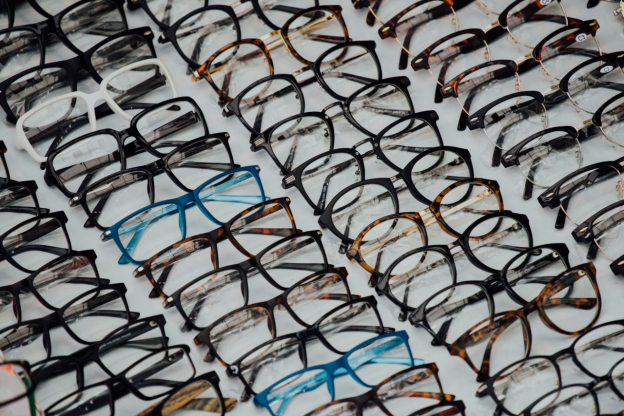

There’s a certain predictability to the frames people reach for in opticians across the UK. Not boring, exactly, but familiar in the way a well-worn coat or an old record feels familiar. Glasses, after all, tend to become part of how someone is seen before anything else is noticed. And over the years, a handful of names have quietly shaped that visual shorthand, moving in and out of fashion without ever really disappearing.
From high streets to independent boutiques, the same brands keep resurfacing on prescription slips. Some lean into heritage, others into design, but all of them have found a place in British wardrobes that rarely feels accidental.
The brands people keep coming back to
There’s a reason certain frames never seem to leave circulation. Ray-Ban sits firmly in that category. Originally known for sunglasses, its optical frames carry the same recognisable ease: simple lines, unfussy shapes, a kind of quiet confidence that doesn’t demand attention but tends to get it anyway.
Alongside it, Oakley brings a different energy. More technical, more angular, often associated with sport, yet increasingly worn as everyday eyewear. In the UK especially, it has slipped from purely functional to something more stylistic without really trying.
Then there’s Persol, a brand that feels almost cinematic in its presence. Slightly heavier frames, softened edges, and a reputation built on craftsmanship rather than noise. It appeals to those who want something considered, but not showy.
When design becomes part of identity
Some brands sit a little closer to fashion than optics, and that shift has changed how people think about glasses altogether. Prada and Gucci are good examples of that crossover. Their frames often mirror runway moods, but they’ve also become part of everyday rotation for people who see eyewear as an extension of personal style rather than a medical necessity.
There’s a subtle shift here. Glasses are no longer just about correcting vision; they’re about deciding how you want to be read in a room. That might explain why bolder silhouettes and logo-led designs have found such steady ground in the UK, even in relatively understated wardrobes.
The quiet luxury of restraint
Not every brand relies on visibility. Tom Ford sits somewhere between confidence and restraint, offering frames that feel structured without being loud. They often attract people who want definition without excess, a kind of controlled polish that works just as well in an office as it does on a late train home.
Then there is Oliver Peoples, which has built its reputation on understatement. The keyword of its appeal is restraint. Frames that don’t try to dominate the face, but instead sit into it naturally. In conversation, you’ll often hear people describe them as “just right”, which is perhaps the most telling endorsement of all. The search for Oliver People’s glasses tends to come from that place, where design meets something more personal and less performative.
What these choices say about us
Taken together, these brands sketch a quiet portrait of British taste. It’s not about extremes or reinvention so much as calibration. Even the more expressive names are often worn in moderation, paired with neutral clothing, treated as part of a broader sense of self rather than a statement in isolation.
There’s also a sense of continuity in it. People rarely abandon a frame they like; they refine it. A slightly thinner rim, a different finish, a shape that nods to something they wore years ago. The brands that endure understand that rhythm. They don’t try to overwrite it.
In the end, the UK’s favourite glasses brands aren’t defined by trend cycles alone. They persist because they’ve learned how to sit comfortably within them, changing just enough to stay present without ever feeling like they’re chasing attention.