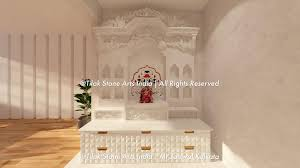

There’s something about walking into a sacred space that stops you mid-step. Maybe it’s the way light bounces off pristine surfaces. Or perhaps it’s the silence that feels different from ordinary quiet. When you’re planning to install a temple for your home, you’re not just adding a room. You’re creating a space where your family will seek peace for decades to come.
The choice of material matters more than most people realize at first. A white marble temple brings a specific quality to your prayer space that other materials simply can’t match. The way natural light interacts with the stone creates an atmosphere that feels both grounded and ethereal. You walk in, and somehow the space feels cleaner, calmer. That’s not accidental.
Marble temple design has evolved quite a bit over the past few years. What used to be heavy, ornate structures have given way to designs that honor tradition while fitting into modern homes. Some families want elaborate carvings that tell stories from sacred texts. Others prefer clean lines with minimal ornamentation. Both approaches work, and the right choice depends on your space and sensibility.
Why White Marble Changes Everything
Color plays a strange role in how we experience sacred spaces. White doesn’t just reflect light. It diffuses it in a way that softens shadows and creates an even glow throughout the room. When you light a lamp in front of a white marble deity, the entire space seems to respond. The stone itself becomes part of the prayer experience.
Vietnam white marble has become a preferred choice for temple construction, and there are practical reasons for this beyond aesthetics. The stone has a fine-grained structure that allows for detailed carving work. Artisans can create intricate patterns without worrying about the stone cracking or chipping during the process. This matters when you’re commissioning something meant to last generations.
The Fear No One Talks About
Here’s what keeps people up at night when they’re planning a temple. You invest time, energy, and resources into creating this space. Then five years down the line, the stone starts showing signs of wear. Maybe it’s yellowing from oil lamps. Perhaps moisture has caused some discoloration. You realize you chose a material that looked beautiful in the showroom but wasn’t built for daily worship.
This happens more often than anyone admits. The wrong marble can absorb oils and develop stains that are nearly impossible to remove. Some stones are porous and trap dirt in ways you won’t notice until it’s too late. You end up with a space that requires constant maintenance just to look presentable. That’s not the kind of worry you want attached to your prayer room.
Getting the Proportions Right
Size isn’t everything, but scale matters tremendously. A temple that’s too large for the room feels imposing rather than inviting. Too small, and it lacks the presence needed to anchor the space. The ceiling height, the width of the platform, and the depth of the alcove where the deity sits. These measurements need to work together in a way that feels natural rather than calculated.
Vastu Shastra offers guidelines that many families find helpful when planning temple placement and proportions. The northeast corner of a home gets recommended frequently, and there’s logic to this beyond tradition. Morning light tends to enter from this direction in most locations. That natural illumination at dawn can transform your prayer experience.
Craftsmanship That Actually Shows
You can tell the difference between hand-carved details and machine-cut patterns once you know what to look for. Machine work has a certain uniformity that feels sterile up close. Hand carving has subtle variations that give the piece character. No two leaves in a hand-carved vine pattern look exactly identical. That’s not a flaw. It’s proof that a skilled artisan spent time on your temple rather than just running stone through automated equipment.
The backside and underside of marble pieces reveal a lot about craftsmanship quality. Cheap work leaves these areas rough because they won’t be visible. Quality work finishes every surface properly because structural integrity matters. You don’t want to discover years later that corners were cut in places you couldn’t see during installation.
Maintenance Reality Check
People worry too much about marble upkeep, then not enough about the right things. Daily dusting takes maybe two minutes. A proper cleaning once a month involves nothing more complicated than a soft cloth and mild soap solution. The material itself is fairly forgiving if you establish simple routines.
What does require attention is the type of oils and materials you use during worship. Some traditional lamp oils can cause buildup over time. Using the right kind prevents this entirely. The stone surface treatment applied during finishing also makes a big difference. A proper sealant protects against staining without changing how the marble looks or feels.
Light, Space, and Feeling
Natural light should reach your temple if at all possible. The way morning sun hits white marble creates an effect that artificial lighting never quite matches. That doesn’t mean you skip proper lamp placement. You need good lighting for evening prayers. But designing the space to catch daylight pays off in ways that are hard to quantify until you’ve experienced it yourself.
The negative space around a temple matters as much as the structure itself. Crowding a beautiful marble temple with too many additional elements dilutes its impact. Sometimes less really is more. A single well-placed lamp, a simple brass bell, maybe a small offering plate. That’s often enough.
Making the Decision
Choosing a temple design feels overwhelming because you’re making a decision you’ll live with for a very long time. Your children will pray here. Maybe their children, too. That weight makes people second-guess every choice. Should the pillars be more ornate? Is the platform too high? Does the archway need more detail?
Here’s what might help. Visit temples that move you. Not to copy their design, but to understand what elements create the feeling you’re seeking. Pay attention to proportions, to how light works in the space, to the overall sense of calm or energy the design creates. Then work with designers who understand both the technical requirements and the emotional purpose of what you’re building.
The right temple design for your home balances several competing needs. It honors tradition without feeling stuck in the past. It fits your space without overwhelming it. It allows for the kind of daily worship your family practices. And perhaps most important, it creates that feeling you’re looking for when you step inside to pray.
Final Thoughts
A white marble temple becomes part of your home’s soul over time. The material ages gracefully rather than deteriorating. The design either grows on you or continues to satisfy, depending on whether you chose something authentic to your needs. This isn’t furniture you can swap out if tastes change. Get it right the first time by focusing on quality, proportion, and the specific requirements of your worship practice.